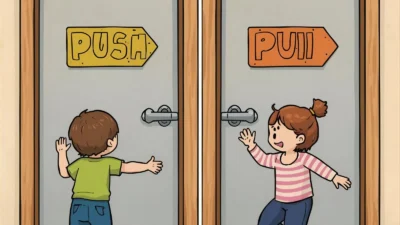

Are you confused about when to use worse or worst? You’re not alone! Many writers, students, and English learners struggle with this common grammar dilemma.
While both words indicate something negative, using the wrong one can make your sentences sound awkward or incorrect.
If you’re writing an email, social media post, school essay, or professional document, knowing the difference will help you communicate clearly and confidently.
In this article, we’ll break down the rules, give easy-to-follow examples, and show you how to choose the right word every time so your writing is polished, precise, and mistake-free!
Worse or Worst – Quick Answer
Worse is the comparative form of bad.
Worst is the superlative form of bad.
| Word | Meaning | When to Use | Example |
| Worse | More bad | Comparing two things | Today is worse than yesterday. |
| Worst | Most bad | Comparing three or more | This is the worst day of my life. |
Simple rule:
- Use worse when comparing two things.
- Use worst when talking about the extreme or the very bottom.
The Origin of Worse or Worst
Both words come from Old English.
- Bad originally became worse (comparative) and worst (superlative).
- Over time, English kept these irregular forms instead of using “badder” or “baddest.”
That’s why:
- We say bad → worse → worst
- Not bad → badder → baddest
This irregular pattern is common in English with words like:
- good → better → best
- little → less → least
British English vs American English Spelling
There is no spelling difference between British and American English for these words.
| English Type | Spelling |
| American | worse / worst |
| British | worse / worst |
| Canadian | worse / worst |
| Australian | worse / worst |
✔ Same spelling
✔ Same meaning
✔ Same grammar rules
Which Spelling Should You Use?
Since spelling does not change by region:
- US audience: Use worse / worst normally
- UK/Commonwealth: Same usage
- Global English: Same rules apply everywhere
So you only need to focus on grammar, not location.
Common Mistakes with Worse or Worst
| Wrong Usage | Why It’s Wrong | Correct Version |
| This is the worse day ever | “Ever” implies extreme | This is the worst day ever |
| This is worst than before | “Than” needs comparative | This is worse than before |
| My headache is worst today | Comparing to before | My headache is worse today |
Worse or Worst in Everyday Examples
Email:
- This version is worse than the previous one.
- This is the worst mistake in the report.
News:
- The economy is worse this year.
- This is the worst flood in decades.
Social Media:
- My phone battery is worse today 😩
- That movie was the worst 😂
Formal Writing:
- Condition B is worse than condition A.
- Condition C showed the worst outcome.
Worse or Worst – Google Trends & Usage Data
- “Worse” is searched more for comparisons and health, news, and daily situations.
- “Worst” is searched more for emotions, rankings, reviews, and extreme cases.
| Context | More Used |
| Comparison | worse |
| Reviews & emotions | worst |
| News headlines | worst |
| Health updates | worse |
Comparison Table
| Base | Comparative | Superlative |
| bad | worse | worst |
FAQs
1. Can I use worse and worst interchangeably?
No. Worse compares two things; worst refers to the extreme.
2. Is “worst than” correct?
No. Say “worse than,” not “worst than.”
3. What is the order of bad, worse, and worst?
Bad → Worse → Worst
4. Is worst always negative?
Yes. It refers to the lowest or most negative level.
5. Can worse be used alone?
Yes. Example: “Things got worse.”
6. Which is stronger, worse or worst?
Worst is stronger because it shows the extreme.
Conclusion
Understanding the difference between worse and worst makes your English clearer, more accurate, and more confident. Both words come from the base word bad, but they serve different roles. Worse is used when you compare two things and want to show that one is more negative than the other. Worst is used when you want to describe the lowest, most negative, or extreme point among many.
There is no spelling difference across countries, so the rules stay the same whether you’re writing for the US, UK, or anywhere else. The key is to focus on comparison versus extremes.
If you remember one thing, remember this:
Use worse with than.
Use worst with words like ever, most, or of all.
With this simple rule, you’ll never feel confused again — and your writing will always be better, not worse.

Isabella Rowan is a talented writer at lingorae.com, known for her clever wit and engaging style.
A true master of puns, she crafts playful wordplay that entertains and delights readers.