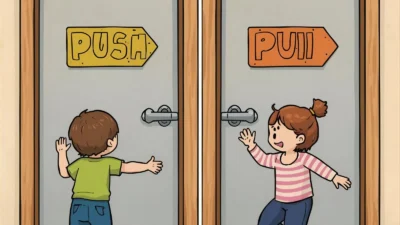

So, you’re searching for where or were, right? Don’t worry you’re not alone.
These two words look similar, sound almost the same, and yet mean completely different things. One tiny spelling change can turn a correct sentence into a confusing one.
Students, writers, and even native English speakers often mix up where and were, especially in fast typing, texting, or exams.
This simple guide will clear that confusion once and for all. You’ll learn what where and were actually mean, how to use them correctly, and how to avoid common mistakes.
By the end, you’ll feel confident choosing the right word every time you write or speak.
Where or Were – Quick Answer
“Where” means a place or position — it asks where something is.
“Were” is the past tense form of the verb to be used with you, we, they, and plural nouns.
Examples:
- Where are my keys? — asking about location.
- They were at school yesterday. — shows a past state or action.
The Origin of Where or Were
The words where and were look similar by accident but come from different roots.
- Where comes from an Old English word meaning at what place and has always related to location.
- Were comes from wǣron, the old plural past tense of to be, used when talking about past states of being.
The similarity in spelling is just part of how English evolved from many sources. Even though they are spelt similarly, their meanings developed independently.
British English vs American English Spelling
The good news — both where and were are spelled the same in British English and American English.
There is no spelling difference between the two variants of English. Only pronunciation can sometimes differ slightly in British and American accents, but the grammar rule stays the same in both.
| Form | Meaning | Example (US) | Example (UK) |
| where | location | Where are you now? | Where did you leave it? |
| were | past tense of be | They were happy yesterday. | You were late again. |
Which Spelling Should You Use?
There is no alternative spelling for either word — you never choose between two forms like colour/color or centre/center.
- If you are talking about a location or position, use where.
- If you are talking about something in the past, use were.
This rule applies across English — American, British, Australian, and global English speakers use the same forms and meanings.
Common Mistakes with Where or Were
People often confuse where and were because they sound a bit alike or appear next to each other in questions. Here are common errors — and the fixes:
❌ Where you at the party last night?
✅ Were you at the party last night?
❌ I don’t know were they went.
✅ I don’t know where they went.
❌ They where excited to see you.
✅ They were excited to see you.
Remember: where is about location, were is about past being or actions.
Where or Were in Everyday Examples
Emails & Formal Writing:
- Please let me know where the files are.
- We were unable to attend the meeting.
News & Social Media:
- Where were fans gathered after the game?
- They were trending on Twitter all day.
Texting & Casual Writing:
- OMG, where were you last night?
- We were stuck in traffic forever.
Still unsure? Think: place → where; past state → were.
Where or Were – Google Trends & Usage Data
People often search “where or were” when they’re writing reports, homework, or messages and they are unsure which to use.
Online learning platforms show steady interest in this topic, particularly from learners studying English as a second language. Searches tend to peak in late summer or school terms when grammar homework increases. There isn’t a major difference in search volumes between countries like the US, UK, or India — learners everywhere struggle with this pair.
Comparison Table – Where vs Were
| Word | Part of Speech | What It Refers To | Example Sentence |
| where | adverb/conjunction/pronoun | Location or position | Where is my phone? |
| were | verb (past tense of be) | Past state/action | They were happy. |
FAQs
Q1: Can “where” and “were” be used interchangeably?
No. They mean different things — where relates to location, were to past state.
Q2: Is “were” only used for plural subjects?
Yes, and with you in past tense. I uses was instead.
Q3: Can “where” be used in phrases that aren’t literal locations?
Yes — it can refer to situations or conditions too.
Q4: Is “where were…” a common phrase?
Yes. It’s often used in questions about past locations.
Q5: Does pronunciation differ between English varieties?
Only slightly; spelling stays the same.
Q6: Can “were” be used in the subjunctive mood?
Yes — for hypothetical sentences like “If I were you.”
Q7: Is “where” ever a verb?
No — it functions as an adverb, conjunction, or pronoun.
Conclusion
Understanding where or were is a basic but important grammar skill in English. Where always refers to location, position, or place literal or metaphorical. Were is the past tense form of be used with plural subjects and you.
They look similar but have very different functions, so mixing them up can change your meaning. By remembering the simple rule — place → where, past action/state → were — you’ll avoid common mistakes in writing and speaking.
Keep practicing with everyday examples, and soon you’ll instinctively choose the right word every time. Clear communication matters in emails, essays, and chats, so mastering these small grammar points pays off with confidence and accuracy.

Isabella Rowan is a talented writer at lingorae.com, known for her clever wit and engaging style.
A true master of puns, she crafts playful wordplay that entertains and delights readers.